- How the Calendar of Ethiopia Today Works
- Why is the Ethiopian Calendar Seven Years Behind?
- Ethiopian Time Keeping: The 12-Hour Clock
- Major Holidays and Festivals in Ethiopia
- Practical Implications of the Ethiopian Calendar Today
- Comparing Legal and Administrative Calendars
- Frequently Asked Questions
- Conclusion
If you look at the calendar of ethiopia today, you will quickly realize that time is kept differently in this ancient East African nation. While the rest of the world operates primarily on the Gregorian calendar, Ethiopia preserves its own unique chronological system. This means that today, the year, month, and even the hour of the day in Ethiopia differ significantly from what you see on your smartphone or wall calendar.
Understanding the calendar of ethiopia today requires stepping back from Western assumptions about time keeping. For visitors, historians, and cultural enthusiasts, this system offers a fascinating glimpse into how ancient traditions survive in the modern era. Let us explore the mechanics, history, and cultural significance of this remarkable calendar system.
Currently, the Ethiopian calendar is seven to eight years behind the Gregorian calendar. This gap influences everything from daily business operations to the scheduling of national holidays. In this article, we will break down how this calendar works, how time is measured on the ground, and what this means for travelers and locals alike.
How the Calendar of Ethiopia Today Works
The calendar of ethiopia today is closely linked to the Coptic Calendar of the Egyptian Church, sharing the same structure of months and leap years. It consists of 13 months in total, making it one of the few active calendars in the world to deviate from the standard 12-month format. This unique structure is proudly celebrated by Ethiopians as a symbol of their cultural independence.
To understand the rhythm of life in Addis Ababa and beyond, one must look at how these months are distributed throughout the year. The system is highly predictable, which makes manual calculations relatively straightforward once you understand the basic rules. Let us look closer at the breakdown of these months and how they form the Ethiopian year.
The 13 Months of the Ethiopian Calendar
In the calendar of ethiopia today, the first 12 months of the year each contain exactly 30 days. This creates a highly balanced system where months do not fluctuate in length like they do in the Western system. The names of these months reflect the ancient Ge’ez language, which remains the liturgical language of the Ethiopian Orthodox Tewahedo Church.
The thirteenth month, known as Pagume, acts as a transitional period at the end of the year. Pagume has five days in a standard year and six days during a leap year. This short month is often associated with spiritual reflection, cleansing, and preparation for the upcoming new year.
Because of this structure, the Ethiopian New Year always falls on September 11th of the Gregorian calendar, or September 12th during leap years. This consistent starting point aligns the calendar with the end of the heavy rainy season in the Horn of Africa. It marks a period of yellow daisies blooming across the highlands, symbolizing rebirth and new beginnings.
The Calculation of Time and Years
The calculation of years in the calendar of ethiopia today relies on an ancient calculation of the birth of Jesus Christ. The Ethiopian Orthodox Church maintains that Christ was born 5,500 years after the creation of the world, a figure that differs from Western calculations. This theological difference is the primary reason for the seven-to-eight-year discrepancy we see today.
For example, when the Gregorian calendar crossed into the year 2000, Ethiopia did not celebrate its millennium until September 2007. This alternative timeline is not a mistake or a delay; rather, it is a deliberate preservation of historical calculations. It serves as a daily reminder of Ethiopia’s deep Christian heritage, which dates back to the 4th century AD.
Transitioning between these two calendar systems can sometimes cause confusion for international organizations operating within the country. However, most government agencies and businesses in Ethiopia are adept at using both systems simultaneously. They seamlessly translate dates to ensure smooth communication with the global community.
Why is the Ethiopian Calendar Seven Years Behind?
To understand why the calendar of ethiopia today lags behind the Gregorian system, we must examine the history of calendar reforms. In the 6th century AD, a Roman monk named Dionysius Exiguus calculated a new chronology for the birth of Christ. His calculations were eventually adopted by the Western Church, forming the basis of the Julian and later Gregorian calendars.
However, the Ethiopian Church adhered to the calculations of Annianus of Alexandria, who placed the Annunciation of Christ’s birth eight years later. When the Roman Catholic Church adjusted its calendar under Pope Gregory XIII in 1582, Ethiopia was isolated from these European reforms. Consequently, the nation maintained its traditional Alexandrian calculations without interruption.
This historical divergence highlights how geographic and religious isolation helped preserve unique traditions in Ethiopia. While Europe was busy adjusting dates to correct astronomical drift, Ethiopia remained committed to its established liturgical cycle. This commitment is why the calendar of ethiopia today remains a living artifact of late antiquity.
Comparison to the Gregorian and Julian Calendars
When comparing the Ethiopian calendar to Western systems, it shares more similarities with the Julian calendar than the Gregorian. The leap year cycle in Ethiopia occurs every four years without exception, unlike the Gregorian system which skips leap years on century years not divisible by 400. This makes the Ethiopian system highly consistent over long stretches of time.
Historically, calendar shifts have led to interesting anomalies across different cultures. For instance, the transition of the new year has varied widely, with some traditions celebrating the julian calendar new year april 1 as a point of seasonal renewal. In contrast, Ethiopia has kept its new year firmly anchored to the September equinox and the end of the African rains.
This seasonal alignment makes the Ethiopian calendar highly practical for agricultural planning. Farmers in the Ethiopian highlands have relied on these exact dates for centuries to predict the arrival of the rains. It shows that the calendar is not just a religious tool, but also a vital ecological guide.
The Theological Basis of the Timeline
The theological calculations behind the calendar of ethiopia today are deeply rooted in biblical chronology. Ethiopian scholars calculate the eras of the world using a system called “Amete Mihret,” which translates to the “Year of Mercy.” This era begins with the incarnation of Christ, distinct from the Western “Anno Domini” era.
Because the Ethiopian Church uses the Alexandrian calculation, the timeline of biblical events is shifted. This theological framework affects the entire liturgical cycle, determining the dates of fasts, feasts, and saint days. For the devout, living on this timeline is an active expression of faith and historical continuity.
This religious devotion ensures that the calendar remains highly relevant to daily life. Even in modern cities like Addis Ababa, the rhythm of the week is dictated by fasts on Wednesdays and Fridays. The calendar of ethiopia today is therefore woven into the very fabric of social and culinary habits.
Ethiopian Time Keeping: The 12-Hour Clock
In addition to a unique calendar, Ethiopia uses a distinct system for measuring the hours of the day. If you look at the calendar of ethiopia today, you must also understand how locals read their watches. The Ethiopian clock is based on a 12-hour cycle that begins at dawn rather than midnight.
In this system, 1:00 AM in Western time corresponds to 7:00 in Ethiopian time. The day is divided into 12 hours of daylight and 12 hours of night. This logical division makes sense in a country located close to the equator, where daylight hours remain relatively constant throughout the year.
When scheduling meetings with Ethiopians, it is crucial to clarify whether the time proposed is “Ethiopian time” or “European/international time.” A simple misunderstanding can lead to a six-hour discrepancy, causing missed appointments and confusion. Most locals are accustomed to clarifying this distinction when speaking with foreigners.
Daylight and Night Cycles
The Ethiopian clock begins its count at sunrise, which is designated as 12:00 (or 0:00) in the local system. As the sun rises higher, the hours progress: 1:00 corresponds to what Westerners call 7:00 AM. This system reflects the natural human experience of daylight, tying the measurement of time directly to the sun’s position in the sky.
This solar-centric approach contrasts with Western systems that rely on mechanical synchronization independent of local solar events. For example, while a tool like a sunset calendar los angeles is used to track changing daylight hours in the United States, Ethiopia’s equatorial location allows for a static, year-round daily cycle. The sun rises and sets at almost the exact same time every day, making the 12-hour offset highly reliable.
At dusk, which is around 6:00 PM in Western time, the night cycle begins. The clock resets to 12:00, and the night hours are counted from 1 to 12 until the next dawn. This intuitive system has survived centuries of modernization and remains the preferred way of speaking about time in Amharic.
Major Holidays and Festivals in Ethiopia
The calendar of ethiopia today is punctuated by vibrant religious and national holidays that draw travelers from around the world. These celebrations are calculated according to the traditional calendar, meaning they occur on different dates than their Western counterparts. Experiencing these festivals offers a deep look into the spiritual life of the nation.
Many of these holidays are marked by colorful processions, traditional music, and communal feasts. They are times when families gather, diaspora members return home, and communities unite in celebration. Let us look at the most significant holidays on the Ethiopian calendar.
Enkutatash (Ethiopian New Year)
Enkutatash, which means “gift of jewels,” is the Ethiopian New Year celebrated on Meskerem 1 (September 11 or 12). The holiday has biblical roots but is also associated with the return of the Queen of Sheba from her visit to King Solomon. Upon her return, her chiefs welcomed her back by replenishing her treasury with rich jewels.
Today, Enkutatash is celebrated with families sharing traditional meals, particularly doro wat (a spicy chicken stew) and injera (sourdough flatbread). Children wear new clothes and go door-to-door singing traditional songs and presenting colorful drawings to neighbors. It is a time of optimism, clean starts, and community bonding.
The holiday also marks the transition from the dark, rainy season to the bright, sunny spring. The countryside is covered in yellow Meskel daisies, which serve as the natural decoration for the festivities. It is a beautiful time to visit the country and experience local hospitality.
Meskel (Finding of the True Cross)
Meskel is one of the most famous religious festivals in Ethiopia, celebrated on September 27 (or September 28 in leap years). It commemorates the finding of the True Cross by Queen Helena (Empress Helena) in the 4th century. The centerpiece of the celebration is the burning of a large bonfire, known as a Demera, in town squares and church yards.
The largest celebration takes place in Meskel Square in Addis Ababa, where tens of thousands of people gather. Priests dressed in colorful robes chant liturgical songs, and participants carry torches to light the massive bonfire. The direction in which the ash falls is watched closely, as it is believed to predict the fortunes of the coming year.
This festival has been recognized by UNESCO as an Intangible Cultural Heritage of Humanity. It draws thousands of tourists and pilgrims who wish to witness the sea of candles and the spiritual energy of the event. The day after Meskel is spent feasting and visiting friends and family.
Genna (Ethiopian Christmas)
While Western Christians celebrate Christmas on December 25th, Genna is celebrated on January 7th according to the calendar of ethiopia today. The celebration is preceded by a 43-day fast known as the Fast of the Prophets, during which devout Orthodox Christians consume only vegan meals. The fast ends on Christmas Eve with midnight mass services that last for hours.
Genna is characterized by solemn religious services followed by joyful family gatherings. A traditional game, also called Genna, which resembles field hockey, is traditionally played by men and boys on this day. According to legend, shepherds were playing this game when they heard the news of the birth of Christ.
Gift-giving is not as commercialized during Genna as it is in the West; instead, the focus remains on religious observance and sharing food. The traditional Christmas meal features doro wat served with local honey wine, known as tej. It is a deeply spiritual holiday that highlights the communal nature of Ethiopian society.
Timkat (Epiphany)
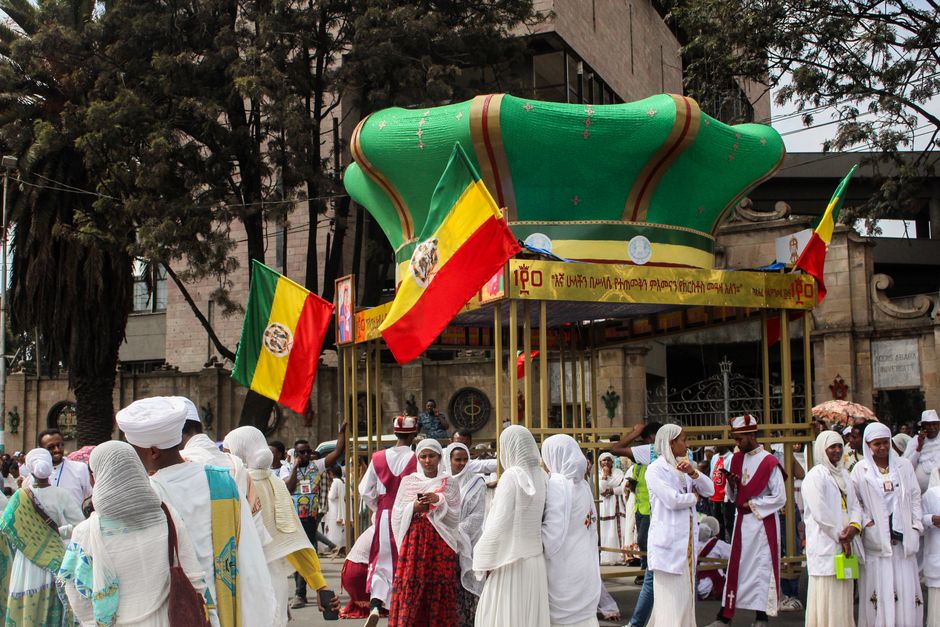
Timkat is perhaps the most visually stunning festival on the Ethiopian calendar, celebrating the baptism of Jesus in the Jordan River. It takes place on January 19th (or January 20th in leap years) and lasts for three days. The festival is famous for its reenactment of baptism and the procession of the Tabot, a model of the Ark of the Covenant.
During Timkat, the Tabot is wrapped in rich fabrics and carried on the head of a priest in a grand procession to a nearby water source. Pilgrims camp overnight near the water, singing hymns and praying. In the morning, the water is blessed, and participants are sprayed with the holy water to renew their baptismal vows.
The city of Gondar is particularly famous for its Timkat celebrations, where the historic bath of Emperor Fasilides is filled with water for the ceremony. The atmosphere is electric, filled with the sounds of drums, bells, and traditional dancing. It is a joyous event that showcases the living history of the Ethiopian Orthodox Church.
Practical Implications of the Ethiopian Calendar Today
Operating with a unique calendar and time system presents both challenges and opportunities in our interconnected world. For international businesses, diplomats, and travelers, navigating the calendar of ethiopia today requires constant awareness. However, the system is deeply integrated into local administration, making it a vital part of daily life.
For example, official government documents, school schedules, and domestic flight tickets often feature both dates. This dual-dating system helps prevent administrative errors while respecting national heritage. Let us examine how this system impacts different sectors of society today.
Business, Tourism, and International Relations
In the business world, international companies operating in Ethiopia must align their financial years with both calendars. The Ethiopian fiscal year begins on July 8th (Hamle 1) of the Gregorian calendar. This can complicate international accounting and reporting, requiring specialized software or manual adjustments by local accountants.
For tourists, booking flights and hotels requires careful attention to detail. Airlines operating within Ethiopia, such as Ethiopian Airlines, use the Gregorian calendar for international bookings but may display local dates for domestic routes. It is always wise to double-check dates to ensure your travel plans align correctly.
Despite these challenges, the unique calendar is a major selling point for the tourism industry. The tourism board has historically used the slogan “Land of 13 Months of Sunshine” to promote the country. This clever branding highlights the unique calendar while emphasizing the pleasant, sunny climate that characterizes much of the year.
Managing Calendars Digitally
In the digital age, managing two calendar systems has become easier thanks to modern technology. Smartphones and computers now offer settings that allow users to display the Ethiopian calendar alongside the Gregorian calendar. This helps locals keep track of international deadlines while staying connected to their cultural roots.
However, digital syncing can sometimes lead to cluttered interfaces or duplicate entries. If you find your digital devices displaying incorrect dates or overlapping schedules, you may need to adjust your settings. Knowing how to erase iphone calendar subscriptions or reset calendar preferences can help resolve these digital conflicts quickly.
As technology continues to evolve, developers are creating more localized apps specifically designed for the Ethiopian market. These apps convert dates, translate times, and even track fasting schedules for Orthodox Christians. They represent a modern solution to a historical challenge, bridging the gap between ancient tradition and modern convenience.
Comparing Legal and Administrative Calendars
Administrative calendars around the world are designed to keep society organized, but they vary widely in their structure and application. In the United States, local jurisdictions rely on highly structured schedules to manage public services, legal proceedings, and court dates. These schedules are strictly tied to the Gregorian calendar to ensure legal compliance.
For example, if you look at the olmsted county court calendar, every hearing, trial, and administrative deadline is mapped out months in advance. Similarly, the crow wing county court calendar dictates the daily operations of the local justice system in Minnesota. These systems require absolute precision, as even a minor scheduling error can impact legal rights and public safety.
In Ethiopia, the legal and court systems must also maintain high levels of precision while operating under a dual-calendar system. Court filings, legal deadlines, and administrative hearings are officially recorded using the Ethiopian calendar. However, when dealing with international law or cross-border disputes, these dates must be officially translated to the Gregorian equivalent to stand up in international courts.
| Feature | Ethiopian Calendar | Gregorian Calendar |
|---|---|---|
| Number of Months | 13 months (12 of 30 days, 1 of 5-6 days) | 12 months (28 to 31 days) |
| New Year Date | September 11 (or September 12 in leap years) | January 1 |
| Current Year Difference | 7 to 8 years behind the Gregorian year | Standard global reference year |
| Daily Time Keeping | 12-hour cycle starting at sunrise (6:00 AM) | 24-hour cycle starting at midnight |
This comparison shows that while the administrative goals of these systems are the same—to maintain order and predictability—their cultural foundations are vastly different. The ability of Ethiopian society to function seamlessly with its traditional calendar demonstrates the resilience of its cultural institutions. It remains a source of pride for a nation that successfully resisted European colonization.
Frequently Asked Questions
What year is it in Ethiopia today?
Because the Ethiopian calendar is seven to eight years behind the Gregorian calendar, the current year in Ethiopia is 2017 (which corresponds to the Gregorian years 2024 and 2025). The year changes every September 11th or 12th.
Why does Ethiopia have 13 months?
Ethiopia uses a calendar system where the first 12 months each have exactly 30 days. The remaining 5 days of a standard year (or 6 days in a leap year) are grouped together to form a 13th month called Pagume at the end of the year.
How do you convert Ethiopian dates to Gregorian?
To convert an Ethiopian date to a Gregorian one, you generally add 7 or 8 years depending on the month. For exact dates, it is best to use an online converter, as the starting points of the months do not align directly with Gregorian months.
How does time work in Ethiopia?
Ethiopian time is based on a 12-hour clock that starts at sunrise (6:00 AM Gregorian time is 12:00 AM Ethiopian time). The day is split into 12 hours of daylight and 12 hours of night, reflecting the natural cycle of the sun.
Is the Ethiopian calendar used for official government business?
Yes, the government of Ethiopia uses the traditional calendar for all official domestic business, legal documents, and national holidays. However, the Gregorian calendar is used for international relations, aviation, and global trade.
Conclusion
The calendar of ethiopia today is a beautiful testament to the nation’s rich history, religious devotion, and cultural independence. By preserving a system that dates back to the early centuries of Christianity, Ethiopia offers a unique perspective on how we measure the passage of time. It challenges our assumptions and invites us to look at the world through a different lens.
Whether you are planning a trip to experience the colorful processions of Timkat, or simply trying to coordinate a business call with a colleague in Addis Ababa, understanding this calendar is essential. It is more than just a way to track days; it is a living expression of the Ethiopian identity. As the world continues to globalize, this unique system remains a proud symbol of cultural preservation.
