
- The Jewish Calendar
- Key Dates and Observances in 2024-2025
- 3. The Hebrew Calendar System
- Religious Significance of the Jewish Calendar
- Cultural and Social Significance of the Jewish Calendar
- Jewish Calendar in Everyday Life
- Resources for Learning More
- The Jewish Calendar and the Future
- The Jewish Calendar and Interfaith Dialogue
- The Jewish Calendar and the Arts
- The Jewish Calendar and Technology
- The Jewish Calendar and Global Jewish Communities: Jewish Calendar 2024-2025
- The Jewish Calendar and the Environment
- The Jewish Calendar and Social Justice
- 15. The Jewish Calendar and Personal Reflection
- FAQ Corner
Jewish Calendar 2024-2025: A Guide to Observances and Traditions, is a comprehensive guide to understanding the intricacies of the Jewish calendar, a system that has shaped Jewish life for millennia. This calendar, with its unique lunar-solar nature and the use of leap years, guides Jewish observance, shaping religious practices, cultural traditions, and even everyday life. It’s a system that intertwines with Jewish identity, offering a framework for understanding history, faith, and community.
The Jewish calendar is more than just a system for tracking dates; it’s a vibrant tapestry woven with threads of history, faith, and cultural expression. From the joyous celebration of Rosh Hashanah to the introspective reflection of Yom Kippur, each holiday on the calendar offers a unique opportunity for spiritual growth and connection. This guide will delve into the intricacies of the Hebrew calendar system, explore the religious and cultural significance of key dates, and illuminate the ways in which the calendar continues to shape Jewish life today.
The Jewish Calendar
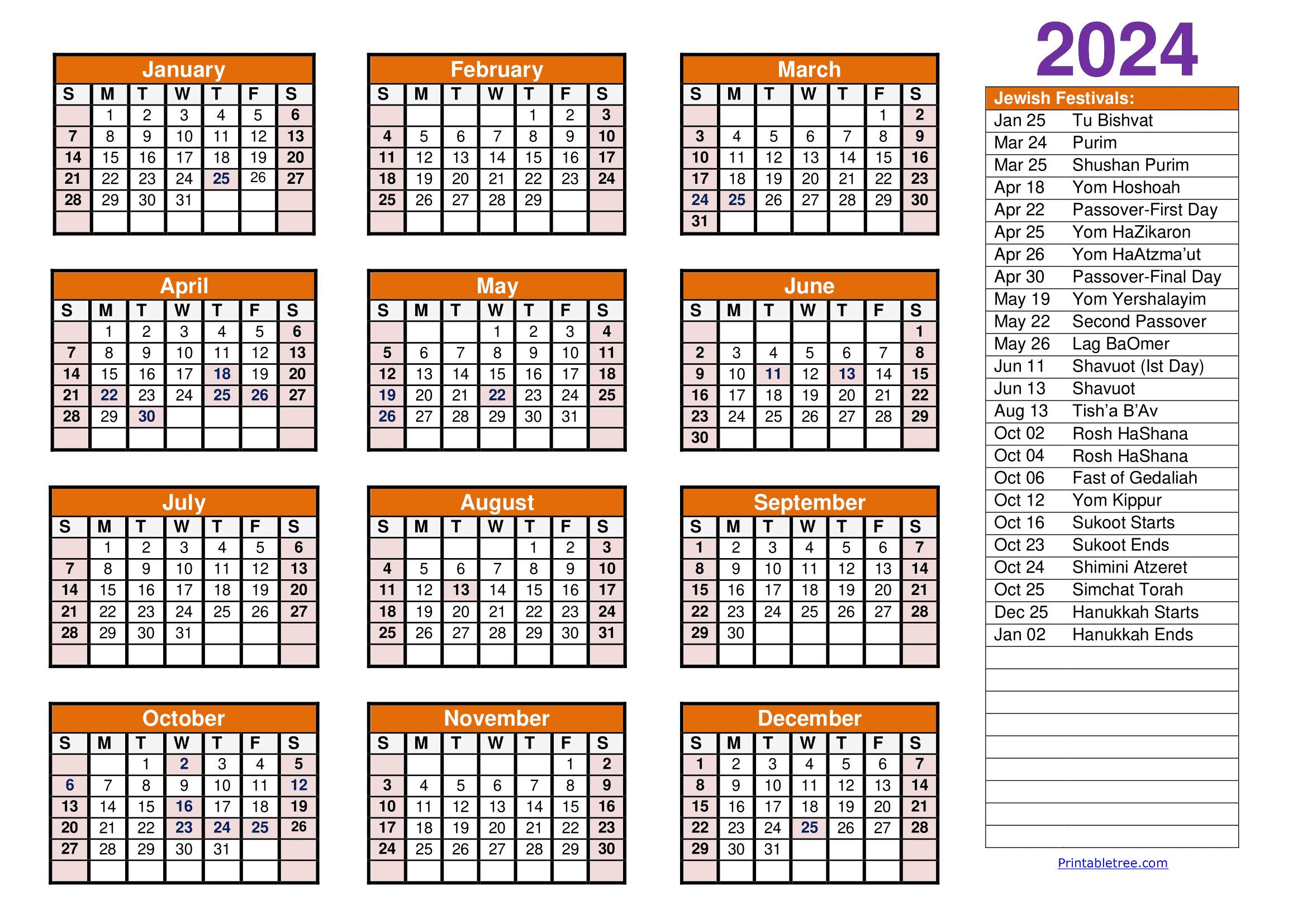
The Jewish calendar, a lunisolar calendar, is a system used to track time and religious observances in Judaism. It has a rich history, deeply intertwined with Jewish religious practice and tradition.
Origins and History
The Jewish calendar originated in ancient Israel, with its roots tracing back to the biblical period. The calendar’s development involved a complex interplay of astronomical observations, religious traditions, and practical needs. It evolved over centuries, incorporating elements from both lunar and solar calendars.
Unique Features
The Jewish calendar is a lunisolar calendar, meaning it is based on both the cycles of the moon and the sun. This results in a unique system that combines the lunar month, approximately 29.5 days long, with the solar year, approximately 365.25 days long.
- Lunar Months: Each month begins with the sighting of the new moon. This means that the Jewish calendar is not fixed, and the exact dates of holidays can vary from year to year.
- Leap Years: To synchronize the lunar months with the solar year, the Jewish calendar incorporates a leap year system. A leap year occurs seven times every 19 years, adding an extra month, Adar II, to the calendar. This ensures that the Jewish calendar remains aligned with the seasons and that the festivals are celebrated at the appropriate times of the year.
Comparison with Other Calendar Systems
The Jewish calendar differs significantly from the Gregorian calendar, the most widely used calendar system in the world. While the Gregorian calendar is a purely solar calendar, the Jewish calendar is lunisolar. This difference leads to variations in the dates of holidays and other important events.
- Gregorian Calendar: Based solely on the solar year, with fixed dates for holidays and events.
- Jewish Calendar: Based on both the lunar month and solar year, with holidays and events that can vary from year to year.
The Importance of the Jewish Calendar
The Jewish calendar plays a crucial role in Jewish life, providing a framework for religious observances, holidays, and daily rituals. It is a living testament to the rich history and traditions of Judaism, serving as a vital link between generations.
Key Dates and Observances in 2024-2025
The Jewish calendar is a lunisolar calendar, meaning it is based on both the lunar cycle and the solar year. This results in a calendar that shifts throughout the years, with holidays falling on different dates. Here are some of the key dates and observances for 2024 and 2025.
High Holy Days
The High Holy Days are a period of introspection and repentance that begins with Rosh Hashanah, the Jewish New Year, and culminates in Yom Kippur, the Day of Atonement.
- Rosh Hashanah (New Year): This holiday marks the beginning of the Jewish New Year and is a time for reflection, prayer, and seeking forgiveness. Rosh Hashanah is celebrated for two days. In 2024, Rosh Hashanah begins on the evening of September 14th and ends on the evening of September 16th. In 2025, Rosh Hashanah begins on the evening of September 3rd and ends on the evening of September 5th.
- Yom Kippur (Day of Atonement): Yom Kippur is a day of fasting and prayer, where Jews seek forgiveness for their sins. This day is observed for 25 hours. In 2024, Yom Kippur begins on the evening of September 23rd and ends on the evening of September 24th. In 2025, Yom Kippur begins on the evening of September 12th and ends on the evening of September 13th.
Sukkot
Sukkot is a seven-day festival that commemorates the Israelites’ journey through the desert after their exodus from Egypt. During Sukkot, Jews build temporary shelters called sukkahs, where they eat meals and spend time together.
- Sukkot (Festival of Booths): This festival begins on the evening of September 28th, 2024, and ends on the evening of October 5th, 2024. In 2025, Sukkot begins on the evening of September 17th and ends on the evening of September 24th.
Hanukkah
Hanukkah is an eight-day festival that celebrates the rededication of the Second Temple in Jerusalem after the Maccabean Revolt.
- Hanukkah (Festival of Lights): Hanukkah begins on the evening of December 10th, 2024, and ends on the evening of December 18th, 2024. In 2025, Hanukkah begins on the evening of November 28th and ends on the evening of December 6th.
Passover
Passover is an eight-day festival that commemorates the Israelites’ exodus from Egypt. It is a time for family gatherings, special meals, and the reading of the Haggadah, a book that tells the story of the Exodus.
- Passover (Festival of Freedom): Passover begins on the evening of March 27th, 2024, and ends on the evening of April 4th, 2024. In 2025, Passover begins on the evening of April 15th and ends on the evening of April 22nd.
3. The Hebrew Calendar System
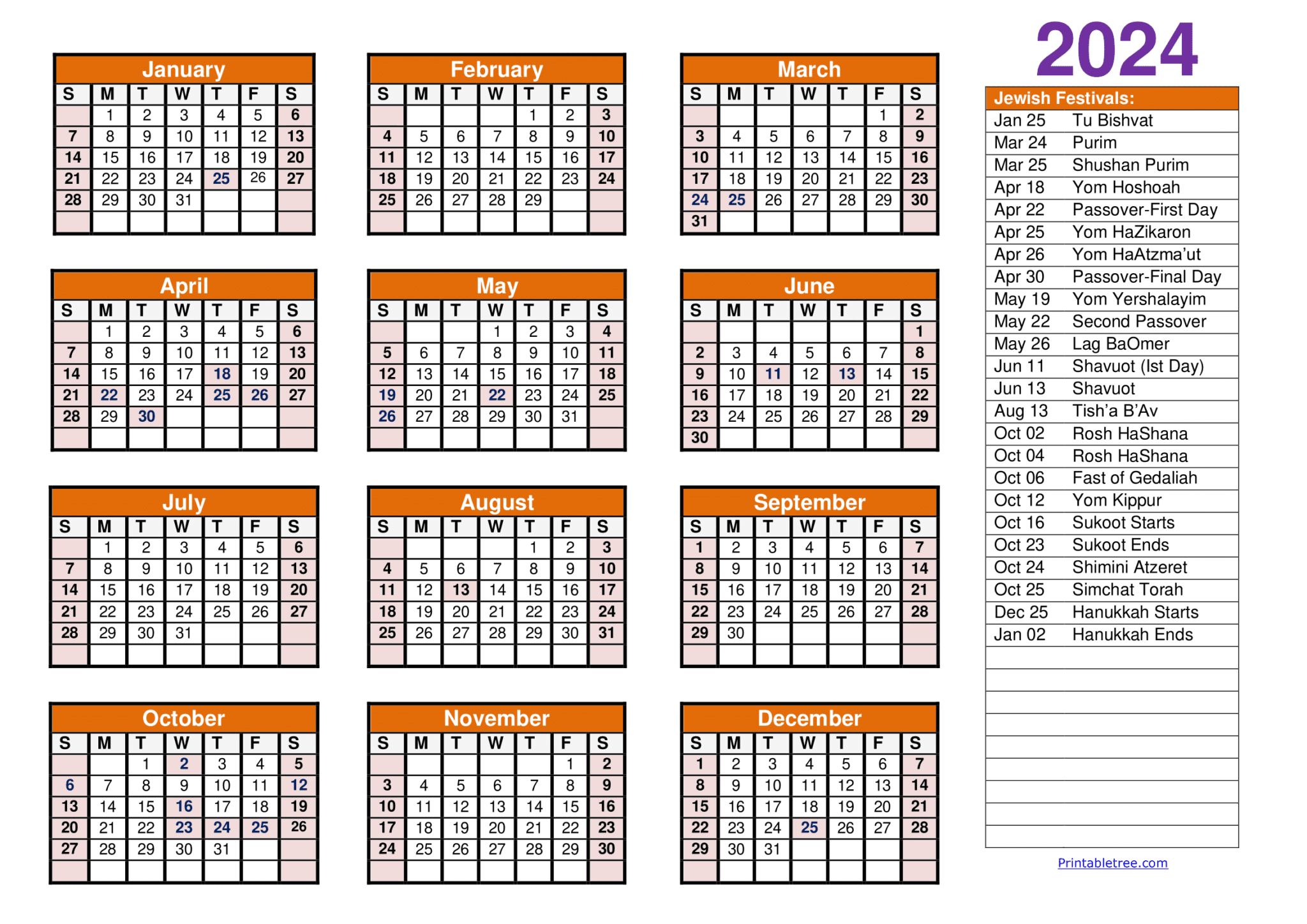
The Hebrew calendar is a lunisolar calendar, meaning it is based on both the lunar cycle and the solar year. It is used by Jewish people worldwide to determine the dates of religious holidays and observances.
Understanding the Structure
The Hebrew calendar consists of 12 months, each with a specific length. The names of the months and their lengths are as follows:
- Tishrei: 30 days
- Cheshvan: 29 or 30 days
- Kislev: 29 or 30 days
- Teves: 29 days
- Shevat: 30 days
- Adar: 29 days or 30 days in a leap year
- Nisan: 30 days
- Iyar: 29 days
- Sivan: 30 days
- Tammuz: 29 days
- Av: 30 days
- Elul: 29 days
The Hebrew week begins on Sunday and ends on Saturday. The days of the week are named as follows:
- Sunday: Yom Rishon (First Day)
- Monday: Yom Sheni (Second Day)
- Tuesday: Yom Shlishi (Third Day)
- Wednesday: Yom Revi’i (Fourth Day)
- Thursday: Yom Chamishi (Fifth Day)
- Friday: Yom Shabbos (Sixth Day)
- Saturday: Yom Shabbat (Sabbath)
The Hebrew day is divided into 24 hours, beginning at sunset. Each hour is divided into 1,080 “chalakim” (parts), which are further subdivided into 76 “reshut” (permissions).
Calendar Calculation
The Hebrew calendar is primarily based on the lunar cycle, with each month starting on the new moon. However, since the lunar year is approximately 11 days shorter than the solar year, an intercalary month (Adar II) is added to the calendar every two or three years to align the lunar calendar with the solar year.
Intercalary Months
The purpose of intercalary months is to ensure that the Hebrew calendar stays in sync with the solar year. Without them, the calendar would drift out of alignment, causing holidays to fall at different times of the year. The calculation of intercalary months is complex and involves a combination of astronomical observations and mathematical formulas.
Leap Year Calculation
The Hebrew calendar follows a 19-year cycle to determine leap years. The following steps are used to calculate leap years:
- Calculate the remainder when the year number is divided by 19. This remainder is known as the “year of the cycle.”
- If the year of the cycle is 3, 6, 8, 11, 14, 17, or 19, then it is a leap year.
For example, the year 5784 (2023/2024) is a leap year because the remainder when 5784 is divided by 19 is 14.
Conversions
Hebrew to Gregorian
To convert a Hebrew date to its equivalent Gregorian date, you can use a Hebrew calendar converter or follow these steps:
- Determine the year in the Hebrew calendar.
- Identify the month in the Hebrew calendar.
- Locate the corresponding Gregorian date for the Hebrew date in a Hebrew calendar table or online converter.
For example, the Hebrew date 1 Tishrei 5784 corresponds to September 25, 2023, in the Gregorian calendar.
Gregorian to Hebrew
To convert a Gregorian date to its equivalent Hebrew date, you can use a Hebrew calendar converter or follow these steps:
- Determine the year in the Gregorian calendar.
- Identify the corresponding Hebrew year for the Gregorian year using a Hebrew calendar table or online converter.
- Locate the corresponding Hebrew date for the Gregorian date in a Hebrew calendar table or online converter.
For example, the Gregorian date October 1, 2023, corresponds to the Hebrew date 10 Tishrei 5784.
Religious Significance of the Jewish Calendar
The Jewish calendar is not just a system for tracking time; it’s deeply interwoven with Jewish religious practice and observance. It provides a framework for understanding the history and narrative of the Jewish people, shaping their rituals, festivals, and daily life.
The Calendar’s Role in Jewish Worship and Observance, Jewish calendar 2024-2025
The Jewish calendar dictates the timing of all major religious observances, including Shabbat, holidays, and fast days. These events are not simply arbitrary dates; they are connected to specific events in Jewish history and tradition, giving them profound religious significance. For example, Passover commemorates the Israelites’ exodus from Egypt, while Rosh Hashanah marks the beginning of the High Holy Days, a period of introspection and repentance.
Key Religious Events and Observances
The Jewish calendar is a tapestry woven with numerous religious events and observances. Here are some of the most significant:
Shabbat
Shabbat, the Jewish Sabbath, is observed from sunset on Friday to nightfall on Saturday. It’s a day of rest and spiritual renewal, dedicated to family, community, and the study of Torah. The weekly observance of Shabbat underscores the importance of pausing from everyday life to connect with the divine and reflect on the meaning of creation.
High Holy Days
The High Holy Days, also known as the Days of Awe, are a ten-day period of intense introspection and spiritual reflection. It begins with Rosh Hashanah, the Jewish New Year, and culminates with Yom Kippur, the Day of Atonement. These days are characterized by prayer, fasting, and acts of repentance.
Passover
Passover, a week-long festival, commemorates the Israelites’ exodus from slavery in Egypt. The central ritual of Passover is the Seder, a ceremonial meal where the story of the exodus is recounted and traditional foods are consumed. Passover highlights the themes of freedom, redemption, and the enduring power of faith.
Sukkot
Sukkot, the Feast of Tabernacles, is a seven-day festival that commemorates the Israelites’ journey through the desert after leaving Egypt. During Sukkot, Jews build temporary shelters called sukkahs, where they eat and sleep for the duration of the festival. Sukkot celebrates the idea of divine protection and the importance of gratitude.
Hanukkah
Hanukkah, the Festival of Lights, commemorates the rededication of the Second Temple in Jerusalem after the Maccabean Revolt. Hanukkah is observed for eight days, with the lighting of a special candelabrum called a menorah. Hanukkah celebrates the triumph of light over darkness and the resilience of the Jewish people.
Purim
Purim, the Festival of Lots, commemorates the deliverance of the Jewish people from the plot of Haman, as recounted in the Book of Esther. Purim is a joyous and festive occasion, marked by costumes, masquerades, and the giving of gifts. Purim celebrates the power of redemption and the importance of remembering the past.
Cultural and Social Significance of the Jewish Calendar
The Jewish calendar, beyond its religious significance, deeply intertwines with Jewish culture and society. It acts as a unifying force, shaping traditions, customs, and celebrations, and ultimately contributing to the identity and community of Jewish people worldwide.
Influence on Jewish Traditions and Customs
The Jewish calendar plays a crucial role in shaping Jewish traditions and customs, providing a framework for various religious observances and celebrations.
- Shabbat: The weekly Sabbath, a day of rest and reflection, is observed from sundown on Friday to nightfall on Saturday. This observance, rooted in the Torah, dictates a range of activities, from abstaining from work to enjoying family meals and religious study.
- Holidays: The calendar Artikels the dates of major Jewish holidays, including Passover, Rosh Hashanah, Yom Kippur, Sukkot, and Hanukkah. Each holiday has unique customs and rituals, reflecting historical events, religious beliefs, and cultural traditions.
- Life Cycle Events: The calendar also governs significant life cycle events like births, weddings, and funerals. For example, circumcisions are typically performed on the eighth day after birth, while weddings are often held on auspicious dates.
Role in Shaping Jewish Identity and Community
The Jewish calendar serves as a powerful tool in shaping Jewish identity and fostering a sense of community.
- Shared Experiences: The shared observance of holidays and rituals creates a sense of unity and shared experience among Jewish people. This collective experience strengthens bonds within families and communities, fostering a sense of belonging and tradition.
- Cultural Transmission: The calendar provides a framework for transmitting Jewish culture and traditions across generations. Parents and educators use the calendar to teach children about Jewish history, values, and practices, ensuring the continuity of Jewish identity.
- Global Connection: The Jewish calendar serves as a unifying force for Jewish communities worldwide. No matter where they live, Jews share the same calendar, observing the same holidays and rituals, creating a sense of global connection and shared heritage.
Jewish Calendar in Everyday Life

The Jewish calendar is not just a system for tracking time; it’s a vibrant tapestry woven into the fabric of Jewish life. Its rhythms and observances shape daily routines, influence work schedules, and bring families together.
Impact on Work Schedules
The Jewish calendar significantly impacts work schedules, especially during major holidays. Businesses often close for Rosh Hashanah and Yom Kippur, allowing employees to observe these solemn days. For example, many stores and offices close for at least two days during Rosh Hashanah, the Jewish New Year, and Yom Kippur, the Day of Atonement. These closures allow individuals to focus on prayer, reflection, and communal gatherings.
Impact on School Calendars
Schools also adjust their calendars to accommodate Jewish holidays. Students receive days off for Passover and Sukkot, allowing them to participate in family traditions and celebrations. During Passover, for example, many schools close for a week or more, enabling students to observe the holiday with their families, including attending Passover seders, a traditional meal that commemorates the Exodus from Egypt.
Similarly, during Sukkot, the Festival of Tabernacles, schools typically provide a day or two off for students to participate in the construction and use of Sukkahs, temporary shelters that symbolize the Israelites’ dwelling in the desert during their journey to the Promised Land.
Family Gatherings
The Jewish calendar plays a central role in family gatherings, fostering strong bonds and traditions. Shabbat dinners, observed every Friday night, bring families together for a shared meal, prayers, and conversation. Passover seders, held on the first two nights of Passover, are filled with symbolic foods, readings from the Haggadah, and lively discussions about the story of the Exodus. These gatherings provide opportunities for families to connect, share stories, and pass down traditions to younger generations.
Resources for Learning More
This section will provide you with a selection of resources to deepen your understanding of the Jewish calendar. These resources include websites, books, and organizations that can provide you with valuable insights into the complexities and significance of this calendar system.
Online Resources
The internet offers a wealth of information on the Jewish calendar. Here are some websites that you can explore:
- Chabad.org: This website offers a comprehensive overview of the Jewish calendar, including explanations of holidays, customs, and the Hebrew calendar system. You can also find online calendar tools and resources for planning Jewish events.
- Jewish Virtual Library: This website provides a vast collection of articles, essays, and resources on various aspects of Jewish life, including the Jewish calendar.
- Hebrew for Christians: This website offers resources for learning Hebrew, including information on the Hebrew calendar system.
- The Jewish Museum: This museum’s website provides insights into Jewish history, culture, and traditions, including the Jewish calendar.
Books
Several books delve into the intricacies of the Jewish calendar, offering a more in-depth exploration of its historical, religious, and cultural significance. Here are a few recommended books:
- The Jewish Calendar: A Guide to Its Observance and Understanding by Rabbi Eliyahu Touger: This book provides a comprehensive explanation of the Jewish calendar, including its history, calculations, and practical applications.
- The Jewish Calendar: Its History and Meaning by Rabbi Dr. Joseph Telushkin: This book offers a historical and religious perspective on the Jewish calendar, exploring its origins and its role in Jewish life.
- The Jewish Calendar: A Guide to Its Observance and Understanding by Rabbi Eliyahu Touger: This book provides a comprehensive explanation of the Jewish calendar, including its history, calculations, and practical applications.
Organizations
Organizations dedicated to Jewish education and culture can provide further resources and support for learning about the Jewish calendar. Here are a few notable organizations:
- The Jewish Federations of North America: This organization supports Jewish communities worldwide and offers resources on various aspects of Jewish life, including the Jewish calendar.
- The Jewish Theological Seminary: This seminary provides educational resources and research on Jewish history, culture, and religion, including the Jewish calendar.
- The American Jewish Committee: This organization promotes Jewish rights and interfaith understanding and offers resources on Jewish culture and traditions, including the Jewish calendar.
The Jewish Calendar and the Future
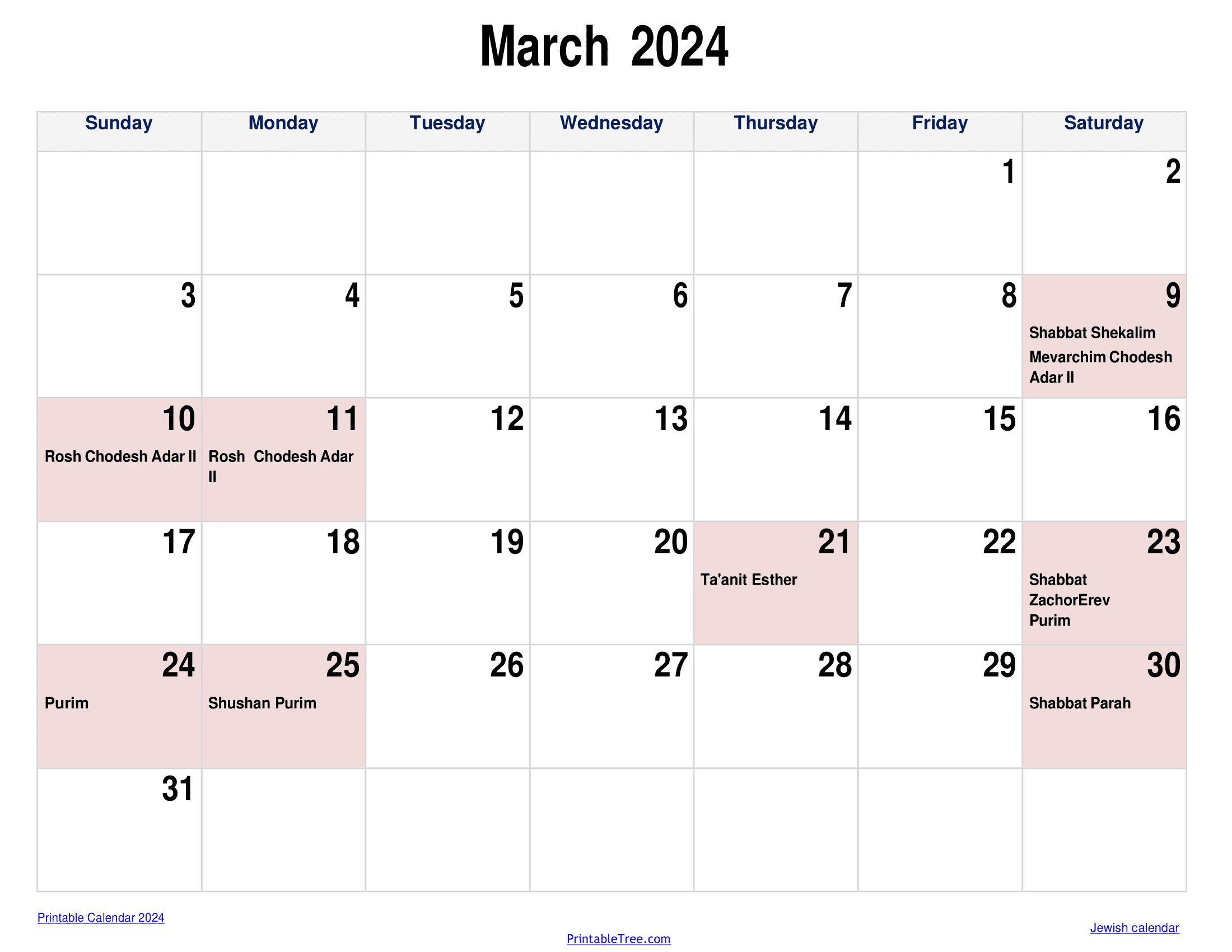
The Jewish calendar, a complex system rooted in lunar cycles and ancient traditions, has endured for millennia, guiding Jewish life and shaping Jewish identity. However, as we navigate the rapidly evolving landscape of the 21st century, the future of this time-honored system is a subject of ongoing discussion and contemplation. Technological advancements, environmental changes, and the evolving needs of a global Jewish community are all factors that will undoubtedly influence the Jewish calendar in the years to come.
Technological Advancements and the Jewish Calendar
The advent of advanced technologies like artificial intelligence (AI), blockchain, and virtual reality presents both opportunities and challenges for the Jewish calendar. AI could potentially automate the intricate calculations required to determine the dates of Jewish holidays, ensuring greater accuracy and accessibility. Blockchain technology, with its secure and transparent nature, could be utilized to create a decentralized and immutable record of Jewish calendar dates, fostering trust and transparency within the Jewish community.
Virtual reality (VR) could offer immersive experiences that bring the traditions and rituals associated with the Jewish calendar to life, fostering deeper engagement and understanding among younger generations.
The Jewish Calendar and Interfaith Dialogue
The Jewish calendar, with its unique rhythms and observances, can serve as a powerful tool for fostering interfaith dialogue and understanding. It provides opportunities for people of different faiths to learn from each other, bridge religious and cultural divides, and build bridges of empathy and respect.
Shared Values and Observances
The Jewish calendar offers numerous opportunities for interfaith dialogue by highlighting shared values and observances. For example, the Jewish New Year, Rosh Hashanah, emphasizes themes of repentance, renewal, and introspection, which resonate with similar themes in many other religions. Similarly, the Festival of Lights, Hanukkah, celebrates the triumph of light over darkness, a universal theme that resonates across diverse cultures and faiths.
- Shared Themes: The Jewish calendar’s emphasis on themes of peace, justice, and compassion aligns with the core values of many other religions. This common ground provides a starting point for interfaith conversations and understanding.
- Joint Celebrations: Interfaith communities often organize joint events and celebrations around holidays like Hanukkah, Passover, and Rosh Hashanah. These events provide opportunities for people from different faiths to come together, share traditions, and build relationships.
- Interfaith Dialogue Groups: Many interfaith dialogue groups utilize the Jewish calendar as a framework for their discussions. By focusing on specific holidays and their meanings, these groups can explore commonalities and differences in religious perspectives.
Examples of Interfaith Collaboration
The Jewish calendar has inspired numerous examples of interfaith collaboration and learning.
- Interfaith Calendars: Some organizations have developed interfaith calendars that combine Jewish holidays with holidays from other faiths. These calendars can be used for educational purposes, promoting understanding and appreciation for different religious traditions.
- Joint Educational Programs: Schools and community centers often organize joint educational programs on Jewish holidays, inviting members of other faiths to learn about Jewish culture and traditions. This type of collaboration fosters mutual understanding and appreciation.
- Interfaith Service Projects: Many interfaith groups participate in service projects during Jewish holidays, such as volunteering at food banks or helping to clean up local parks. These shared experiences can build bridges of empathy and cooperation between people of different faiths.
The Jewish Calendar and the Arts
The Jewish calendar has been a rich source of inspiration for artists and writers across the centuries. Its unique holidays, rituals, and cyclical nature have profoundly shaped Jewish culture and artistic expression. From ancient synagogues adorned with intricate mosaics to contemporary performance art installations that challenge traditional interpretations, the Jewish calendar has left an indelible mark on the artistic landscape.
Visual Arts
Visual artists have long used their talents to depict the major holidays of the Jewish calendar. These depictions offer insights into the traditions and rituals associated with each holiday, as well as the artistic styles and techniques prevalent in different eras.Here are some examples of artworks that represent holidays like Rosh Hashanah, Yom Kippur, Passover, and Hanukkah:
- Rosh Hashanah: Paintings depicting the blowing of the shofar, a ram’s horn, symbolize the call to repentance and the beginning of the High Holy Days. The shofar’s distinctive shape and sound have inspired numerous artistic representations, from realistic depictions to abstract interpretations. Some artists have incorporated the shofar into larger compositions, using it as a symbol of hope and renewal.
For instance, Marc Chagall’s painting “The Fiddler” features a shofar prominently, suggesting the connection between music and the call to repentance.
- Yom Kippur: Paintings depicting the Day of Atonement often feature imagery of fasting, prayer, and introspection. The theme of forgiveness and redemption is often represented through symbolic imagery, such as a dove, a burning candle, or a hand reaching out to heaven. Artists have also explored the emotional weight of Yom Kippur through their use of color, light, and composition.
- Passover: Paintings depicting the Passover Seder often feature symbolic imagery associated with the holiday, such as the Seder plate, the afikoman (a piece of matzah hidden during the Seder), and the four cups of wine. The story of the Exodus from Egypt is often depicted through narrative scenes, with artists using their skills to bring the biblical narrative to life.
- Hanukkah: Paintings depicting the Festival of Lights often feature the menorah, the eight-branched candelabrum, as a central element. The menorah’s flickering flames symbolize the miracle of the oil that lasted for eight days, a symbol of hope and perseverance. Artists have also depicted the holiday through scenes of children playing dreidel, the traditional Hanukkah game, or families celebrating together.
The Jewish Calendar and Technology
The advent of the internet and mobile technology has significantly impacted how we observe the Jewish calendar. Online calendar tools and digital resources have transformed the way we track Jewish holidays, observe Shabbat, and engage with Jewish traditions. This section will explore the multifaceted relationship between the Jewish calendar and technology, examining its impact on observance, preservation, and innovation.
Online Calendar Tools and Jewish Observance
Online calendar tools like Google Calendar have become indispensable for many Jewish individuals and communities. These platforms provide a convenient way to track Shabbat, holidays, and other important dates, allowing for better planning and observance.
- For example, users can set reminders for Shabbat candle lighting times, holidays, and fast days, ensuring they don’t miss important observances.
- These tools can also be used to schedule synagogue services, community events, and other Jewish activities, facilitating participation and engagement.
- Online calendars can be shared with family and friends, promoting communal observance and shared experiences.
However, relying solely on online calendar tools for Jewish observance presents certain challenges.
- Potential for technological errors or glitches can disrupt observance, particularly in cases of time-sensitive rituals like Shabbat candle lighting.
- Over-reliance on technology might diminish the importance of traditional methods of calendar tracking, such as consulting Jewish calendars or using physical reminders.
The Jewish Calendar and Global Jewish Communities: Jewish Calendar 2024-2025
The Jewish calendar, with its unique blend of lunar and solar calculations, has shaped Jewish life for centuries. Beyond its religious significance, it also serves as a powerful tool for connecting Jewish communities around the world, despite their geographical distances and diverse cultural contexts. This section explores how the Jewish calendar is adapted, celebrated, and used to foster a sense of global Jewish identity.
Adapting the Jewish Calendar
The Jewish calendar, while rooted in ancient tradition, is remarkably adaptable. Jewish communities across the globe have modified its observance to suit their local contexts, particularly when it comes to the timing of holidays and dietary practices.
- Timing of Holidays: The Jewish calendar is primarily lunar, meaning that holidays fall on different days of the Gregorian calendar each year. This presents a unique challenge for communities in different time zones. For instance, Passover, which commemorates the Israelites’ exodus from Egypt, may begin in the evening in one part of the world and continue into the following morning in another.
This can lead to different interpretations of the holiday’s duration and observance.
- Dietary Practices: Dietary restrictions, such as the prohibition of consuming leavened bread during Passover, can be particularly challenging for communities with diverse agricultural practices. Some communities may have difficulty sourcing unleavened bread or adhering to the strict dietary rules, leading to adaptations and variations in observance.
- Rituals and Traditions: Different Jewish communities have developed unique customs and traditions associated with specific calendar events. These variations can be influenced by local cultural influences, historical events, or even personal preferences. For example, the celebration of Purim, which commemorates the Jewish people’s deliverance from the evil Haman, might involve different types of costumes, foods, or readings in different communities.
The Jewish Calendar and Global Jewish Identity
The Jewish calendar plays a vital role in fostering a sense of global Jewish identity and connection. Shared rituals and celebrations based on the calendar, despite geographical distance, contribute to a feeling of belonging among Jewish people worldwide.
- Unifying Communities: The Jewish calendar serves as a common framework for Jewish life, providing a shared set of observances and celebrations that transcend geographical boundaries. Whether it’s the joyous celebration of Hanukkah, the solemn observance of Yom Kippur, or the collective remembrance of the Holocaust on Yom HaShoah, these events create a sense of unity and shared history among Jewish communities worldwide.
- Shared Rituals and Celebrations: Shared rituals and celebrations, such as the lighting of candles on Shabbat or the recitation of prayers during Rosh Hashanah, provide a sense of continuity and connection across generations and geographical distances. These shared practices serve as tangible reminders of Jewish heritage and cultural identity.
- Shared History and Tradition: The Jewish calendar is deeply rooted in Jewish history and tradition. The dates of holidays and festivals often commemorate significant events in Jewish history, reminding Jewish people of their shared past and the enduring nature of their faith. This shared history serves as a powerful unifying force for Jewish communities worldwide.
The Jewish Calendar and Jewish Identity in Different Cultural Contexts
The Jewish calendar is not merely a religious tool but also a cultural one, shaping Jewish identity and heritage in diverse cultural contexts. It is integrated into artistic expressions, educational practices, and community building efforts, enriching Jewish life in myriad ways.
- Artistic Expressions: The Jewish calendar has inspired countless works of art, literature, and music. From the traditional melodies of Shabbat prayers to the modern paintings depicting scenes from Jewish holidays, the calendar has served as a source of inspiration for Jewish artists across generations.
- Educational Practices: The Jewish calendar plays a crucial role in educating younger generations about Jewish history and culture. Holidays and festivals provide opportunities for families and communities to share stories, traditions, and values, ensuring the continuity of Jewish identity across generations.
- Community Building and Social Activism: Calendar events often serve as catalysts for community building and social activism. For example, Passover, with its themes of liberation and freedom, has inspired social justice movements and calls for action against oppression. Similarly, Yom Kippur, with its emphasis on repentance and forgiveness, has been a time for reflection and social change.
Comparing Calendar Observances in Different Communities
| Community | Calendar Event | Date | Unique Customs and Traditions | Significance for the Community |
|---|---|---|---|---|
| Ashkenazi Jewish Community (Europe) | Passover | Variable, usually in March or April |
|
|
| Sephardi Jewish Community (Spain, Portugal, North Africa) | Passover | Variable, usually in March or April |
|
|
| Mizrahi Jewish Community (Middle East, North Africa) | Passover | Variable, usually in March or April |
|
|
The Jewish Calendar and the Environment
The Jewish calendar, with its intricate system of lunar and solar calculations, is deeply intertwined with the natural world. Its rhythms and observances reflect a profound awareness of the cycles of nature and the importance of living in harmony with the environment. This section explores the fascinating connection between the Jewish calendar and environmental concerns, delving into how it influences Jewish practices related to agriculture, food, and sustainability.
The Jewish Calendar and Agricultural Practices
The Jewish calendar is intricately linked to agricultural practices, particularly in the context of the Land of Israel. Many Jewish holidays are rooted in agricultural cycles, reflecting the historical dependence of Jewish life on the land. For example, Passover, celebrating the Exodus from Egypt, coincides with the spring harvest, while Sukkot, the festival of booths, marks the end of the harvest season.
These celebrations, deeply embedded in the agricultural calendar, foster a connection to the natural world and its bounty.
The Jewish Calendar and Social Justice

The Jewish calendar is not just a tool for marking religious holidays and observances; it’s also a powerful framework for understanding and addressing social justice issues. Throughout the year, Jewish tradition offers opportunities for reflection, action, and collective responsibility, providing a roadmap for creating a more just and equitable world.
The Jewish Calendar and Economic Inequality
The High Holidays, Rosh Hashanah and Yom Kippur, are a time for introspection and reflection. They are also a time when we are reminded of the importance of economic justice. The themes of teshuvah (repentance) and tikkun olam (repairing the world) encourage us to examine our own actions and consider how we can contribute to a more just society. The tradition of tzedakah (charity) is particularly relevant during this time, urging us to engage in acts of generosity and support those in need.
During the High Holidays, many Jewish communities organize fundraising drives and charitable initiatives, focusing on addressing issues such as poverty, homelessness, and food insecurity. These efforts are a tangible way to connect the principles of the High Holidays with the realities of economic inequality.
The Jewish Calendar and Liberation
Passover, a celebration of freedom and redemption, is a powerful reminder of the ongoing struggle for justice. The story of the Exodus, where the Israelites were liberated from slavery in Egypt, resonates with contemporary social justice movements fighting for equality and human rights. The themes of liberation and redemption can be applied to contemporary social justice movements working to dismantle systemic oppression.
Passover is a time to reflect on the struggles of those who are marginalized and oppressed, and to commit to working towards a more just and equitable world.
The Jewish Calendar and Tzedakah
The tradition of tzedakah, often translated as “charity,” goes beyond simply giving money. It is a moral obligation to act justly and compassionately, to ensure the well-being of others. Tzedakah is a powerful tool for addressing social justice issues because it encourages a proactive approach to social change. Instead of simply reacting to crises, tzedakah inspires us to build a more just society through acts of generosity and support.
There are many ways to reimagine tzedakah to address systemic issues like homelessness. For example, supporting organizations that provide housing and support services, advocating for policies that promote affordable housing, and volunteering at local shelters are all ways to put tzedakah into action.
The Jewish Calendar and Community Action
The Jewish calendar can be used to organize community action around various social justice issues. For example, the week of Tu B’Shevat, the New Year for Trees, can be a time to focus on environmental justice. Communities can organize tree-planting events, participate in environmental advocacy campaigns, and support organizations working to protect the environment. Similarly, Shabbat, the weekly day of rest, can be an opportunity to reflect on our relationship with the environment and to commit to sustainable practices.
The Jewish calendar for 2024-2025 features significant holidays like Rosh Hashanah and Yom Kippur, while the school year for Prosper ISD follows a different schedule. To see when the students are out for breaks and holidays, check out the prosper isd calendar 2024-2025 for a comprehensive overview of the school year. This allows you to plan your own schedule around the Jewish holidays and school breaks, ensuring a seamless transition between religious observances and academic activities.
Jewish Organizations and Social Justice
Numerous Jewish organizations are working to address social justice concerns, both domestically and internationally. T’ruah, a rabbinic human rights organization, uses the power of the Jewish tradition to advocate for justice and equality. Their initiatives include promoting economic justice, fighting for immigrants’ rights, and working to end mass incarceration. The Jewish Council for Public Affairs (JCPA) is another organization that advocates for social justice through its advocacy platform.
The JCPA works on issues such as racial justice, LGBTQ+ equality, and voting rights. These organizations demonstrate how the Jewish calendar can be a catalyst for social change, inspiring and mobilizing communities to address the most pressing social justice issues of our time.
15. The Jewish Calendar and Personal Reflection
Growing up in a Jewish household, the Jewish calendar has always been a constant presence in my life. It’s not just a collection of dates and holidays; it’s a living tapestry woven with traditions, rituals, and deep spiritual meaning. This reflection explores how the Jewish calendar has shaped my personal values, beliefs, and practices, inspiring me to live a more meaningful and purposeful life.
Personal Reflections
The Jewish calendar is a rich tapestry of holidays and observances, each offering unique opportunities for reflection and growth. Here’s a glimpse into how three significant holidays have impacted my life:
| Jewish Holiday/Event | Personal Meaning | Values/Beliefs | Practices |
|---|---|---|---|
| Rosh Hashanah | A time for introspection, setting intentions for the year ahead, and acknowledging the cycle of life and death. | It reinforces the importance of accountability, personal growth, and the pursuit of a meaningful life. | Attending synagogue services, blowing the shofar, reflecting on the past year, and setting resolutions for the year to come. |
| Yom Kippur | A day of atonement and seeking forgiveness, a time for deep soul-searching and reconciliation. | Emphasizes the values of humility, compassion, and the need for forgiveness and redemption. | Fasting, prayer, attending synagogue services, and engaging in acts of repentance and charity. |
| Passover | A celebration of freedom and redemption, commemorating the exodus from Egypt and the journey towards liberation. | Instills the importance of standing up for justice, fighting oppression, and cherishing freedom. | Participating in the Seder, eating matzah, telling the story of the Exodus, and reflecting on the themes of liberation and resilience. |
Impact on Life
“The world is full of magic things, patiently waiting for our senses to grow sharper.” W.B. Yeats
This quote, though not explicitly Jewish, resonates deeply with my understanding of the Jewish calendar. It encourages me to approach life with a sense of wonder and to cultivate a deeper awareness of the spiritual dimension that surrounds us. The Jewish calendar reminds me that life is a journey of growth and transformation, filled with opportunities for learning, reflection, and connection.The Jewish calendar has inspired me to embrace a more mindful and purposeful approach to life.
It’s influenced my decisions by reminding me of the importance of family, community, and social justice. For example, during Passover, I make a conscious effort to volunteer at a local food bank, recognizing the connection between the story of the Exodus and the plight of those experiencing hunger and poverty.
FAQ Corner
How is the Jewish calendar different from the Gregorian calendar?
The Jewish calendar is a lunar-solar calendar, meaning it follows both the cycles of the moon and the sun. This is unlike the Gregorian calendar, which is purely solar. The Jewish calendar’s lunar aspect means that months are based on the phases of the moon, while its solar aspect ensures that the calendar stays in sync with the seasons. This difference results in the Jewish calendar having a unique structure and specific rules for determining leap years.
What are the main differences between the Jewish and Gregorian calendars?
The main difference is that the Jewish calendar is a lunisolar calendar, while the Gregorian calendar is a solar calendar. This means that the Jewish calendar is based on the cycles of both the moon and the sun, while the Gregorian calendar is only based on the sun. This difference leads to a number of other differences, such as the length of the year, the length of the months, and the dates of the holidays.
How do I convert a Gregorian date to a Hebrew date?
Converting a Gregorian date to a Hebrew date requires using a conversion tool or table. There are many online resources available that can help you do this. You can also find conversion tables in Jewish calendars or books about the Jewish calendar.
