- Introduction to the Hindu Calendar
- Structure and Components of the Hindu Calendar
- Astrological Aspects of the Hindu Calendar
- Practical Applications of the Hindu Calendar
- Regional Variations in the Hindu Calendar
- The Hindu Calendar in Modern Times
- Comparing the Hindu Calendar with Other Calendars: Hindu Calender 2024
- The Future of the Hindu Calendar
- Key Questions Answered
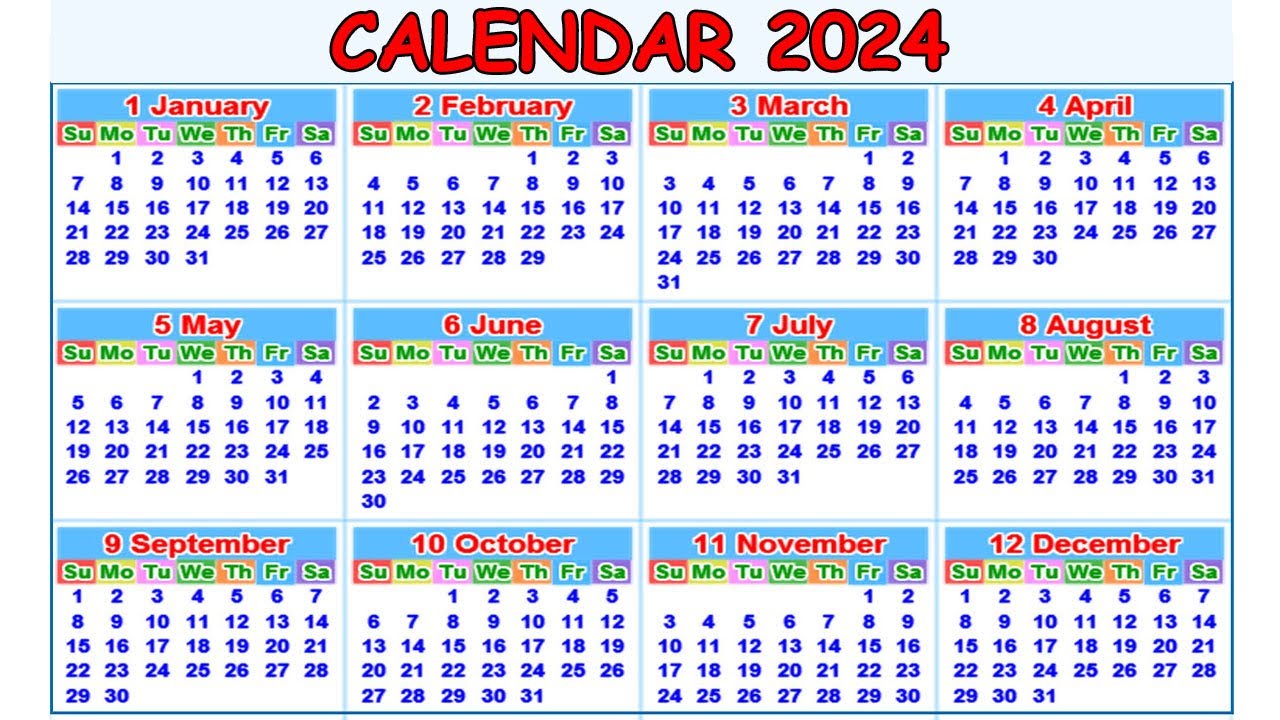
Hindu calender 2024 – Hindu Calendar 2024 sets the stage for a year filled with vibrant festivals and auspicious dates, offering a glimpse into the rich tapestry of Hindu culture and traditions. The Hindu calendar, a complex system rooted in lunar and solar cycles, guides religious practices, social events, and even daily life.
This year, the calendar promises a diverse array of celebrations, from the joyous Holi festival to the spiritually significant Diwali.
Understanding the Hindu calendar goes beyond merely knowing the dates of festivals; it delves into the profound significance of each event, its historical background, and the rituals that accompany it. This comprehensive guide explores the intricate workings of the Hindu calendar, illuminating the cultural and spiritual essence behind its structure and the profound impact it has on the lives of millions.
Introduction to the Hindu Calendar
The Hindu calendar, a lunisolar calendar, is one of the oldest and most intricate calendar systems in the world. Its origins can be traced back to ancient Vedic times, with its structure and principles evolving over centuries. This calendar plays a pivotal role in Hindu culture and religious practices, shaping the lives of millions across the globe.
Origins and History
The Hindu calendar’s roots lie in the Vedic era, dating back to the 2nd millennium BCE. Early Vedic texts, like the Rig Veda, mention lunar months and the importance of solar cycles. The calendar’s development is attributed to the ancient Indian sages, who observed the celestial bodies and their movements, meticulously charting the changing seasons and the passage of time.
Key Principles and Concepts
The Hindu calendar is a lunisolar calendar, meaning it is based on both the cycles of the moon and the sun. It consists of twelve lunar months, each determined by the moon’s phases, with an intercalary month added periodically to synchronize with the solar year.
Lunar Months
The twelve lunar months in the Hindu calendar are:
- Chaitra
- Vaisakha
- Jyestha
- Ashadha
- Shravana
- Bhadra
- Ashvina
- Kartika
- Margashirsha
- Pausha
- Magha
- Phalguna
Each lunar month begins with the new moon, called Amavasya, and ends with the full moon, called Purnima.
Solar Year
The Hindu calendar also acknowledges the solar year, which is divided into twelve zodiac signs known as Rashis. The solar year begins with the vernal equinox, which occurs around March 20th. This point is also known as the beginning of the zodiac sign Mesha (Aries).
Intercalary Month
To maintain the alignment between the lunar and solar cycles, an intercalary month, called Adhika Maas or Purushottama Maas, is added to the calendar every two or three years. This month is considered highly auspicious and dedicated to Lord Vishnu.
Significance in Hindu Culture and Religious Practices
The Hindu calendar plays a vital role in Hindu culture and religious practices, dictating the timing of festivals, rituals, and auspicious occasions.
Festivals
Numerous Hindu festivals are celebrated according to the Hindu calendar, with each festival holding a unique significance and tradition. Some prominent examples include:
- Diwali: The festival of lights, celebrated on the new moon night in the month of Kartika, marks the victory of good over evil.
- Holi: The festival of colors, celebrated on the full moon night in the month of Phalguna, signifies the arrival of spring and the triumph of good over evil.
- Dussehra: The festival of victory, celebrated on the tenth day of the bright fortnight in the month of Ashvina, commemorates the victory of Lord Rama over Ravana.
Rituals and Auspicious Occasions
The Hindu calendar also guides rituals and auspicious occasions, such as weddings, housewarming ceremonies, and other life events. The calendar provides specific dates and times considered auspicious for these events, based on planetary positions and astrological influences.
Tau tau, mau tau kapan hari raya Hindu di tahun 2024? Coba cek kalender Hindu 2024, biar gak ketinggalan! Eh, ngomong-ngomong soal kalender, tau gak kalau ada kalender pembayaran foster care di Tennessee ? Lucu juga ya, bisa tau kapan uang masuk buat bantu anak-anak yang lagi dirawat.
Balik lagi ke kalender Hindu, jangan lupa cek ya! Biar tau kapan hari raya dan bisa ikut merayakan.
Religious Observances
Many Hindus follow specific religious observances throughout the year, guided by the Hindu calendar. These observances include fasting, prayer, and meditation, often tied to specific days or months, and are dedicated to various deities.
Structure and Components of the Hindu Calendar
The Hindu calendar, a complex system rooted in astronomical observations and religious practices, plays a vital role in shaping the lives of millions across India and the diaspora. Its structure, encompassing various components and types of years, is a testament to the intricate interplay of lunar and solar cycles.
Types of Years
The Hindu calendar employs multiple year systems, each with its unique starting point and significance.
- Vikram Samvat:This calendar, prevalent in North India, dates back to 57 BCE, marking the traditional beginning of the reign of King Vikramaditya. The current Vikram Samvat year is 2079, corresponding to 2023 CE.
- Saka Samvat:This calendar, widely used in South India, dates back to 78 CE, marking the beginning of the Saka era, established by the Western Kshatrapa rulers. The current Saka Samvat year is 1945, corresponding to 2023 CE.
- Kali Yuga:This calendar, based on the Hindu mythology of time cycles, marks the beginning of the current epoch, believed to have started in 3102 BCE. The current Kali Yuga year is 5125, corresponding to 2023 CE.
Lunar and Solar Aspects
The Hindu calendar is a lunisolar calendar, meaning it incorporates both lunar and solar cycles. The lunar aspect is represented by the synodic month, the period between two consecutive new moons, which averages 29.53 days. The solar aspect is represented by the tropical year, the time it takes for the Sun to return to the same position in the ecliptic, which is approximately 365.24 days.The Hindu calendar uses a system of intercalary months to reconcile these two cycles.
An intercalary month, known as Adhik Maas or Purushottama Maas, is added to the calendar about every 32 or 33 months to align the lunar and solar cycles. This ensures that the lunar months remain synchronized with the seasons.
Major Months and Their Names
The Hindu calendar comprises 12 months, each associated with specific deities and festivals. The names of these months vary across different regions and languages.
- Chaitra (March-April):This month marks the beginning of the Hindu New Year. It is associated with the deity Brahma and the festival of Holi.
- Vaisakha (April-May):This month is associated with the deity Vishnu and the festival of Akshaya Tritiya.
- Jyestha (May-June):This month is associated with the deity Shiva and the festival of Ganga Dusshera.
- Ashadha (June-July):This month is associated with the deity Surya and the festival of Guru Purnima.
- Shravana (July-August):This month is associated with the deity Shiva and the festival of Raksha Bandhan.
- Bhadra (August-September):This month is associated with the deity Vishnu and the festival of Krishna Janmashtami.
- Ashwin (September-October):This month is associated with the deity Durga and the festival of Navratri.
- Kartik (October-November):This month is associated with the deity Shiva and the festival of Diwali.
- Margashirsha (November-December):This month is associated with the deity Vishnu and the festival of Dhanteras.
- Pausha (December-January):This month is associated with the deity Surya and the festival of Makar Sankranti.
- Magha (January-February):This month is associated with the deity Shiva and the festival of Maha Shivaratri.
- Phalguna (February-March):This month is associated with the deity Vishnu and the festival of Holi.
Astrological Aspects of the Hindu Calendar
The Hindu calendar is deeply intertwined with the principles of Vedic astrology, known as Jyotish. This ancient system uses the positions of celestial bodies, primarily the Sun, Moon, and planets, to interpret events and influence human lives. Astrological calculations play a significant role in determining auspicious and inauspicious periods, impacting various aspects of life, including religious observances, social gatherings, and even personal decisions.
Zodiac Signs and Planetary Positions
The Hindu calendar is based on the zodiac, a circle of 12 constellations through which the Sun appears to travel annually. Each sign is associated with specific planetary influences and characteristics. The position of the Sun at the time of a person’s birth determines their zodiac sign, believed to shape their personality and destiny.
The positions of other planets at a specific time also hold significant astrological importance. The planetary movements are believed to influence various aspects of life, including health, wealth, relationships, and career. These positions are used to calculate auspicious and inauspicious periods, known as muhurats, for various events.
Influence on Auspicious and Inauspicious Periods
Astrological calculations determine auspicious and inauspicious periods for various events, such as weddings, festivals, and new ventures. The position of the Moon is particularly important in determining auspicious periods. The Moon’s phases, particularly the full moon (Purnima) and new moon (Amavasya), are considered significant in Hindu rituals and observances.
Planetary combinations, known as yogas, are also considered crucial in determining auspiciousness. Specific planetary alignments are believed to bring good fortune, while others are associated with challenges or obstacles.
Significance of Specific Planetary Alignments
Specific planetary alignments have been interpreted in Vedic astrology for centuries. For example, the conjunction of Jupiter and Saturn, known as the “Great Conjunction,” is believed to signify significant changes and shifts in the world. This alignment occurs approximately every 20 years and is considered a powerful event.
Other notable alignments include:* Venus and Mars:This combination is often associated with passion, creativity, and energy. It can also be associated with conflicts and disputes.
Sun and Moon
This alignment, known as the “Solar Eclipse,” is considered significant in Hindu astrology. It is believed to be a time of intense energy and can bring about significant changes.The interpretation of planetary alignments is complex and nuanced. Astrologers consider the specific positions of the planets, their aspects, and their influence on the individual’s birth chart to provide personalized interpretations.
Practical Applications of the Hindu Calendar
The Hindu calendar is not merely a system for tracking time; it serves as a vital guide for various aspects of life, from daily routines to significant events. Its intricate structure, incorporating astronomical observations and religious beliefs, provides a framework for aligning activities with auspicious periods and ensuring harmony in life.
Scheduling Events and Religious Ceremonies
The Hindu calendar is instrumental in scheduling events, especially religious ceremonies. Auspicious days, known as “muhurats,” are considered ideal for conducting rituals, weddings, and other important events. The calendar provides details about these muhurats, taking into account planetary positions, lunar phases, and other astrological factors.
For instance, the auspicious period for weddings, known as “Vivaha Muhurtam,” is carefully determined based on the calendar. Similarly, the Hindu calendar guides the scheduling of festivals like Diwali, Holi, and Navratri, ensuring their observance during the appropriate lunar phases.
Observing Auspicious Periods
The Hindu calendar emphasizes the importance of aligning activities with auspicious periods. Specific days and times are considered favorable for undertaking various tasks, from starting a new business to embarking on a journey. For example, the “Akshaya Tritiya” is considered an auspicious day for starting new ventures, while the “Amavasya” (new moon) is considered a time for spiritual reflection and ancestor worship.
The calendar provides guidance on these auspicious periods, enabling individuals to make informed decisions and maximize the positive energies associated with them.
Applications in Agriculture
The Hindu calendar has a long-standing connection with agriculture, playing a crucial role in guiding farming practices. It provides insights into the best times for planting, harvesting, and other agricultural activities, aligning them with the natural cycles of the seasons.
The calendar’s guidance on lunar phases, for instance, helps farmers determine the optimal time for sowing seeds, ensuring their successful germination and growth. The calendar also provides insights into the influence of planetary positions on crop yields, enabling farmers to make informed decisions about crop selection and cultivation methods.
Applications in Business
The Hindu calendar’s principles of auspicious periods are also applied in business. Entrepreneurs and business leaders often consult the calendar to determine favorable days for launching new products, signing contracts, and undertaking significant business ventures. The calendar’s insights into planetary influences can help businesses make strategic decisions, such as timing marketing campaigns or expanding into new markets.
By aligning business activities with auspicious periods, businesses aim to attract good fortune and achieve success.
Applications in Social Gatherings
The Hindu calendar plays a significant role in social gatherings, shaping the timing of festivals, celebrations, and community events. It provides a framework for bringing people together, fostering a sense of shared cultural identity, and strengthening community bonds. The calendar’s guidance on auspicious periods ensures that social gatherings are held during times considered favorable for positive energy and harmonious interactions.
It also helps coordinate the timing of events, ensuring that they align with the schedules of participants and avoid conflicts.
Regional Variations in the Hindu Calendar
The Hindu calendar, with its lunar-solar framework, exhibits fascinating regional variations, reflecting the diverse cultural tapestry of India. These variations are not merely cosmetic; they deeply impact the timing of festivals, religious observances, and even daily routines. This section delves into the nuances of regional calendars, exploring their unique features and the traditions they uphold.
Regional Calendar Variations
The Hindu calendar’s regional variations are primarily rooted in the methods used to determine the lunar month and the solar year. While the basic principles remain consistent, the specific calculations and interpretations vary across different regions.
| Region | Calendar Variations | Unique Traditions | Examples |
|---|---|---|---|
| North India |
|
|
|
| South India |
|
|
|
| East India |
|
|
|
| West India |
|
|
|
The Hindu Calendar in Modern Times

The Hindu calendar, with its rich history and intricate system, continues to be a vital part of the lives of millions across the globe. Its relevance extends beyond religious observances, shaping cultural practices, social interactions, and even influencing modern scientific endeavors.
In the face of globalization and technological advancements, the Hindu calendar has shown remarkable adaptability, demonstrating its enduring significance in the modern world.
The Enduring Relevance of the Hindu Calendar
The Hindu calendar remains relevant in the modern world due to its deep-rooted connection with cultural and religious practices. It provides a framework for understanding the rhythms of nature, guiding religious observances, and shaping social interactions.
- Religious Observances:The calendar dictates the timing of important festivals, rituals, and pilgrimages, allowing for collective participation and strengthening religious identity. For instance, Diwali, Holi, and Navratri are celebrated based on the lunar calendar, bringing communities together in shared experiences.
- Cultural Practices:The calendar influences various aspects of daily life, including dietary practices, auspicious occasions, and social customs. The observance of fasting days, such as Ekadashi and Amavasya, are determined by the lunar phases, reflecting the calendar’s impact on daily routines.
- Astrological Significance:The Hindu calendar incorporates astrological principles, influencing decisions related to marriage, business ventures, and other significant events. The position of celestial bodies, as determined by the calendar, is believed to impact individual destinies and societal well-being.
Globalization and Technological Adaptations
Globalization and technological advancements have impacted the Hindu calendar in both challenging and enriching ways. While the calendar’s core principles remain intact, its application and dissemination have undergone significant transformations.
- Global Reach:Technology has facilitated the dissemination of the calendar’s knowledge across borders, connecting Hindu communities worldwide. Online platforms and mobile applications provide access to calendar information, enabling individuals to stay connected to their traditions, regardless of their geographical location.
- Calendar Reform and Standardization:The advent of modern communication has led to a growing awareness of regional variations in the Hindu calendar. Efforts are underway to standardize the calendar, ensuring uniformity in the observance of religious events and facilitating inter-regional communication.
- Integration with Modern Life:The calendar has adapted to modern lifestyles by incorporating digital tools. Online calendars and mobile applications allow users to integrate religious observances into their daily schedules, promoting a balance between tradition and contemporary living.
The Hindu Calendar and Cultural Identity
The Hindu calendar plays a pivotal role in shaping cultural identity, serving as a unifying force that connects individuals to their heritage and traditions.
- Shared Experiences:The calendar provides a shared framework for understanding and celebrating cultural events, fostering a sense of community and belonging. Festivals and rituals, determined by the calendar, offer opportunities for collective participation and strengthen cultural bonds.
- Transmission of Knowledge:The calendar serves as a repository of cultural knowledge, transmitting values, beliefs, and traditions across generations. Its intricate system and symbolic language provide a rich tapestry of cultural heritage, ensuring its continuity and relevance.
- Cultural Expression:The calendar inspires various forms of artistic expression, including music, dance, literature, and visual arts. Festivals and celebrations are often marked by vibrant cultural performances, reflecting the calendar’s influence on artistic traditions.
Comparing the Hindu Calendar with Other Calendars: Hindu Calender 2024

The Hindu calendar, with its intricate system of lunar and solar calculations, stands distinct from other major calendar systems like the Gregorian and Islamic calendars. While all these systems aim to track time and organize events, their underlying principles and applications differ significantly, reflecting the unique cultural and historical contexts from which they emerged.
Comparison of Calendar Systems, Hindu calender 2024
A comparative analysis of the Hindu calendar with the Gregorian and Islamic calendars reveals both similarities and differences in their structure, principles, and applications.
- Structure:The Gregorian calendar, based on the solar year, is a continuous system with fixed dates and a leap year every four years. The Islamic calendar, a lunisolar calendar, is based on lunar cycles, resulting in a shorter year of approximately 354 days.
The Hindu calendar, also lunisolar, uses a combination of lunar and solar cycles, with a year typically consisting of 12 lunar months. However, the Hindu calendar incorporates an intercalary month (Adhik Maas) every two to three years to synchronize with the solar year.
- Principles:The Gregorian calendar is a purely solar calendar, while the Islamic calendar is a purely lunar calendar. The Hindu calendar, with its lunisolar system, incorporates elements of both. It utilizes the lunar cycle for determining the months, while the solar cycle is used for aligning the calendar with the seasons.
- Applications:The Gregorian calendar is widely used for civil and commercial purposes globally. The Islamic calendar is primarily used for religious observances, with the lunar months determining the dates of important events like Ramadan. The Hindu calendar is used for religious purposes, including festivals and rituals, and also plays a role in social and cultural events, such as marriages and auspicious occasions.
Historical and Cultural Context
The historical and cultural context significantly shaped these calendar systems. The Gregorian calendar emerged from the Julian calendar, which was introduced by Julius Caesar in 45 BCE. It was later reformed by Pope Gregory XIII in 1582 to better align with the solar year.
The Islamic calendar dates back to the 7th century CE, originating from the Hijra, the migration of Prophet Muhammad from Mecca to Medina. The Hindu calendar, with its roots in ancient Vedic scriptures, has evolved over centuries, influenced by astronomical observations and religious beliefs.
The Future of the Hindu Calendar

The Hindu calendar, with its rich history and intricate structure, stands at a crossroads in the modern world. Its continued relevance in the face of globalization, technological advancements, and evolving societal norms presents both challenges and opportunities. This section explores the potential for evolution and adaptation of the Hindu calendar in the future, considering its role in shaping cultural identity and religious practices.
The Hindu Calendar’s Potential for Evolution and Adaptation
The Hindu calendar, deeply embedded in the cultural and religious fabric of India and the diaspora, possesses a remarkable capacity for adaptation. This adaptability stems from its inherent flexibility, which allows for adjustments to align with changing astronomical phenomena and societal needs.
- Dynamic Nature:The Hindu calendar is not static but dynamically adjusts based on the lunar and solar cycles. This inherent flexibility allows for incorporating new knowledge and observations about astronomical phenomena, ensuring its accuracy over time.
- Regional Variations:The presence of regional variations within the Hindu calendar, such as the Amavasya and Purnima dates, reflects the diverse cultural contexts in which it is observed. This regional diversity fosters a sense of inclusivity and allows for the calendar to adapt to local customs and traditions.
- Integration of Modern Knowledge:The Hindu calendar can benefit from incorporating modern scientific advancements in astronomy and calendrical calculations. This integration can enhance its accuracy and provide a more precise understanding of astronomical events.
Challenges Facing the Hindu Calendar in a Changing World
The Hindu calendar, like any traditional system, faces challenges in a rapidly changing world. These challenges stem from the need to balance tradition with modernization, cultural diversity with globalization, and religious observances with contemporary lifestyles.
- Globalization and Cultural Homogenization:Globalization can lead to cultural homogenization, potentially diluting the unique features of the Hindu calendar. This homogenization can result in a decline in the understanding and appreciation of its complex system and cultural significance.
- Technological Advancements:Technological advancements, such as digital calendars and timekeeping devices, can impact the traditional practices associated with the Hindu calendar. These advancements may lead to a shift away from traditional methods of observing and interpreting the calendar.
- Evolving Societal Norms:Changing societal norms, particularly in urban environments, can challenge the traditional observances associated with the Hindu calendar. Modern lifestyles, with their emphasis on efficiency and convenience, may lead to a decline in the importance of certain religious practices.
Opportunities for the Hindu Calendar in Shaping Cultural Identity and Religious Practices
Despite the challenges, the Hindu calendar holds significant potential for shaping cultural identity and religious practices in the future. Its adaptability, coupled with its deep cultural and religious significance, provides a unique platform for promoting understanding, fostering community, and preserving tradition.
- Strengthening Cultural Identity:The Hindu calendar can serve as a powerful tool for strengthening cultural identity, particularly in the face of globalization. By promoting awareness of its traditions, festivals, and observances, the calendar can help individuals connect with their cultural heritage and foster a sense of belonging.
- Promoting Religious Practices:The Hindu calendar plays a crucial role in guiding religious practices, such as festivals, rituals, and pilgrimages. Its continued relevance can ensure the transmission of these practices across generations and promote a deeper understanding of religious beliefs and values.
- Fostering Community and Inclusivity:The Hindu calendar can foster a sense of community and inclusivity by providing shared experiences and common reference points. Its observances and festivals can bring people together, irrespective of their social or economic backgrounds, promoting unity and understanding.
The Hindu Calendar’s Continued Relevance in the 21st Century
The Hindu calendar’s continued relevance in the 21st century lies in its ability to adapt to the changing world while retaining its core values and traditions. Its dynamic nature, regional variations, and potential for integration with modern knowledge allow it to remain a vital part of cultural identity and religious practices.
The Hindu calendar is not just a system of timekeeping but a reflection of the intricate relationship between humanity and the cosmos. Its future lies in its ability to evolve while preserving its essence, ensuring its continued relevance in shaping cultural identity and religious practices for generations to come.
Key Questions Answered
What is the difference between the Vikram Samvat and Saka Samvat calendars?
The Vikram Samvat calendar is based on the traditional Hindu calendar, while the Saka Samvat calendar is used for official purposes in India. The Vikram Samvat calendar starts with the year 57 BCE, while the Saka Samvat calendar begins with the year 78 CE.
How does the Hindu calendar influence daily life?
The Hindu calendar influences various aspects of daily life, including scheduling weddings, housewarming ceremonies, and other important events. It also guides the observance of auspicious and inauspicious periods for specific activities like travel or starting new ventures.
Is the Hindu calendar used only in India?
While the Hindu calendar is predominantly used in India, it is also followed by Hindu communities worldwide, including in Nepal, Sri Lanka, and Southeast Asia.
What are some of the unique traditions associated with different regions in India?
Different regions in India have their own unique traditions and variations in the Hindu calendar. For instance, the celebration of Holi might involve different rituals or customs in different parts of the country. Similarly, the dates of certain festivals might vary slightly depending on the region.
